
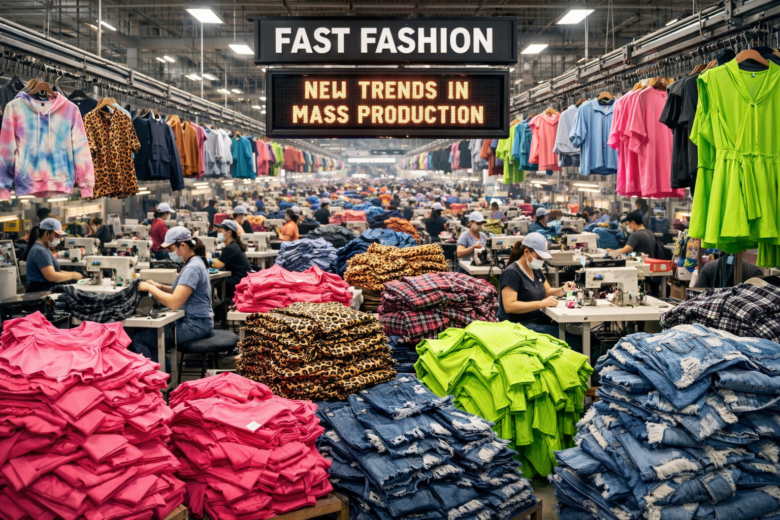
The world fashion industry is going through an extreme change in the last 20 years. What used to have been occurring in predictable seasonal rhythm has become a hyper-responsive system based on data, speed, and consumer demand. Ultra-fast fashion is not only fast fashion accelerated, but an indication of the emergence of the technologically-driven, social media-driven, and high-tech supply chain-driven creation of real-time clothing. This transformation is transforming the manner in which brands design, produce and distribute clothing to consumers across the globe.
knowledge of Fast Fashion.
What is Fast Fashion?
Fast fashion is a retail business concept that rapidly converts runway fashions into inexpensive fashion to mass markets. It takes brands a few weeks to design, manufacture, and release collections as opposed to months. The popularity of this model was explained by the possibility to provide fashionable models at affordable prices, and fashion had never been so accessible.
Major attributes of Fast Fashion.
- Quick production cycles as compared to traditional fashion.
- Low cost targeting the mass customers.
- New collections regularly (weekly or bi-weekly).
- Contracted production in low cost areas.
- High fashion-inspired trend-driven designs.
Consumer and Industry Effect.
Democratized style Fast fashion gave consumers the opportunity to experiment without incurring high costs. It, however, promoted excessive consumption and expendable apparel practices as well. Speed and price are the key competences of the brands, at the cost of sustainability and ethical practices.
Growth of Ultra-Fast Fashion.
What is Ultra-Fast Fashion?
Ultra-fast fashion is based on the fast fashion model by taking it to the next level, through the use of real-time data analytics and digital platforms. It can take only a matter of days and even 2472 hours to design, produce, and launch new products, and this is possible because brands can recognize a trend, and within just a few days, they are able to design, produce, and launch new products.
Major features of Ultra-Fast Fashion.
- Social media data trend tracker in real time.
- Very small production cycles (days compared to weeks).
- Small-scale production that has rapid replenishment.
- Direct to consumer online models of sales.
- Over dependence on AI and predictive analytics.
Technology: The role of technology.
The foundation of ultra-fast fashion is technology. Consumer behavior is analyzed with artificial intelligence, and trends in styles are determined immediately with the help of algorithms. Digital supply chains enable a brand to respond swiftly, reducing the threat of stock, and increasing flexibility.
Ultra-Fast Fashion vs Fast Fashion.
Production and Speed.
Fast fashion has a weekly cycle of operation whereas ultra-fast fashion is almost instant. The latter have the capability to transport a product through the concept to consumers in record time, significantly decreasing lead times.
Business Models
Fast fashion is based on the physical shops and seasonal collections, and ultra-fast fashion is online, data-driven, and highly agile. It concentrates on small batch testing and scaling that is successful.
Consumer Engagement
Social media is the key to the success of ultra-fast fashion. Viral trends, influencers and user generated content directly affect production decisions. Although fast fashion is still trend oriented, it lacks this amount of directness.
Inventory Strategy
Fast fashion manufactures more and thus, the chances of stocking off-put are higher. Ultra-fast reduces waste by creating smaller batches and restocking according to demand.
The emergence of Real-Time Clothing Production.
Data-Driven Design

Companies have turned to real-time information on applications such as Instagram and Tik Tok to recognize trends in real-time. This enables designers to design products that are in tandem with the prevailing consumer tastes with exquisite precision.
Supply Chains Agile.
The contemporary supply chain has never been more flexible. Real time responsiveness can be achieved through the ability of manufacturers to modify production volumes, alternate designs and deliver products to consumers faster.
On-Demand Manufacturing
Other companies are even trying on-demand production where products are not produced until an order has been received. This minimizes waste and streamlines production in accordance with the real demand.
Environmental and Ethical Issues.
Sustainability Challenges
Fast and ultra-fast fashion are both a source of environmental concerns, such as waste of textiles, water pollution and carbon emissions. These issues can be further aggravated by ultra-fast fashion, since it is extremely fast, unless handled in a responsible manner.
Labor and Ethical Issues.
The high level of production is often based on the employment of low-paid workers, which questions the conditions of work and remuneration. Supply chain transparency is an important issue.
Consumer Responsibility
Consumers also are very instrumental in the development of the industry. The growing concern on sustainability is driving brands to pursue sustainability and ethical sourcing.
Future of Fashion Production.
AI and Automation.
The trend prediction and inventory management will be further optimized using artificial intelligence. Manufacturing automation has the potential of further lowering the manufacturing time and expenses.
Sustainable Innovations
The fashion industry is looking into sustainable materials, recycling, and circular models of fashion to have less impact on the environment.
Movement towards Conscious Consumption.
With increased awareness of consumers, demand for quality, durability and ethical production will increase which may decrease the ultra-fast cycle.
Conclusion
The move towards ultra-fast fashion as opposed to fast fashion reveals a major change in the world apparel fashion industry. Technology use and data have turned speed and efficiency upside down in real-time clothes production. But, this fast development is accompanied by environmental and ethical issues that cannot be overlooked. Fashion will rely on striking a balance between innovation and sustainability whereby speed will not be at the expense of responsibility.
Frequently Asked Questions (FAQs).
1. What is the difference between fast and ultra-fast fashion?
Fast fashion uses production cycles that are weekly and ultra-fast fashion can create and release products within the days based on real time information.
2. What is causing ultra-fast fashion to develop so fast?
The trends of social media, superior technology, and demand by consumers to have instant satisfaction are the motivating factors to its growth.
3. Is ultra-fast fashion more bad for the planet?
It may be because of higher speed of production and consumption but there are brands that are embracing sustainable practices in order to reduce the effects.
4. What role does technology have in contemporary fashion manufacturing?
Technology allows an analysis of trends in real time, accelerates the design process and manages the supply chain effectively.
5. Is it possible to minimize the adverse effect of fast fashion by the consumers?
Yes, it can be done through sustainable brands, purchasing less, and focusing on quality and not quantity.