
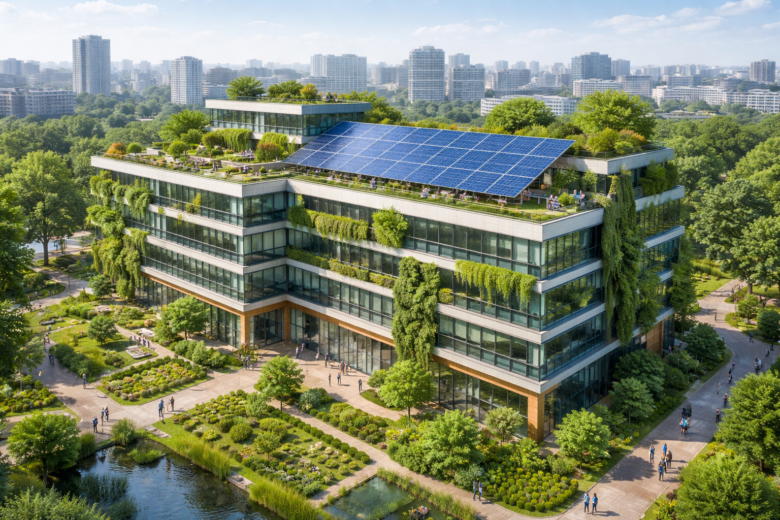
The property market is experiencing a forceful revolution as sustainability takes its center stage. Green buildings and environmentally friendly housing are not a niche idea anymore and more of a standard of present-day development. Sustainable real estate is changing the way homes and commercial properties are designed, constructed and managed due to environmental issues, the rising energy prices and the growing consumerism.
Green Buildings: What Are They?
Green buildings are buildings that are constructed in a way that limits environmental effects as much as possible and maximizes efficiency and comfort to the occupants. Sustainable materials, energy-saving systems, and intelligent designs are used in these buildings in order to minimize carbon footprints. Green construction focuses on long-term environmental and economic ideals, starting with residential houses up to commercial complexes.
The major characteristics of Green Buildings.
Energy-efficient lighting and appliances are one of the most important elements of green construction. These systems save on electricity and do not compromise the best performance. The integration of renewable energy and the solar panels enables the buildings to produce their own energy, reducing their reliance on conventional sources of energy. Water saving fixtures, and rainwater harvesting systems, contribute to saving one of the most precious natural resources.
Also recycled and sustainable materials decrease construction waste and environmental degradation. Better living conditions and ventilation are guaranteed by better indoor air quality systems. When combined, these features make buildings eco-friendly and cost effective in the long run.
The reasons why sustainable housing is becoming popular.
The need of having environmentally friendly homes is growing with an amalgamation of both environmental consciousness and economic advantage. Customers have become more aware of how they live and how that affects the environment. Sustainable houses provide the means of minimizing energy use and still enjoying the comforts associated with the modern world.
Environmental Benefits
Green buildings become very important in minimizing greenhouse gas emission and protecting natural resources. They help make the environment cleaner and healthier by working with renewable sources of energy and efficient systems. Less waste and improved management of resources also contribute to the ecological balance in the long-term.
Economic Advantages
Green construction may be more expensive in the short run but the savings are significant in the long run. Sustainable housing is a good financial investment since it reduces electricity bills, less water consumption, and low-maintenance costs. In the long run, such savings usually exceed the initial costs, and environmentally friendly homes will be more cost-effective.
Health and Well-being
Green houses are made in consideration of human health. The indoor air quality is enhanced by better ventilation, natural lighting, and non-toxic materials. The result of this is improved physical well-being and health among residents and therefore sustainable housing is not only an environmental decision but also an upgrade of their lifestyles.
The Technologies that are Making Real Estate Eco-Friendly.
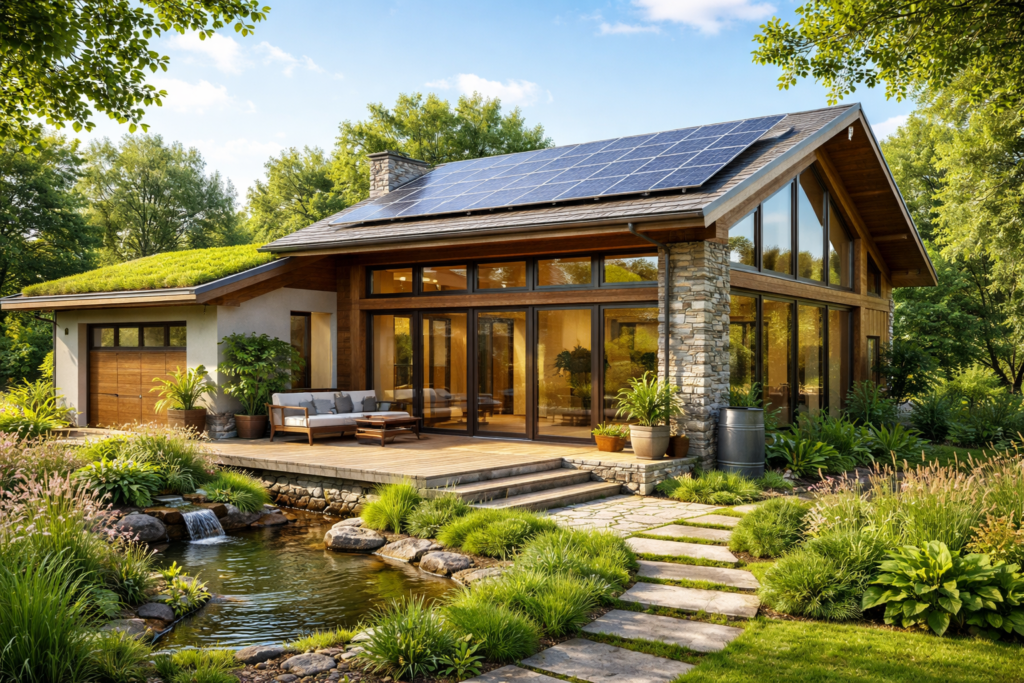
The emergence of green buildings is associated with innovation. The use of modern technologies is facilitating the implementation of sustainable practices in construction in a more affordable manner.
Smart Home Integration
Smart systems enable the owners of homes to manage lights, temperature and energy consumption effectively. Automated technologies minimize the irrelevant consumption and contribute to the maximum use of energy without sacrificing comfort. These systems also offer real time information and this allows the making of better decisions regarding energy conservation.
Renewable Energy Solutions
Geothermal heating, solar panels and wind energy systems are becoming more available. These clean energy sources lessen the reliance on fossil fuel and the utility bills are greatly minimized. With the increasing technology, these systems are also becoming more efficient and affordable to the homeowner.
Sustainable Construction Materials
Constructors are beginning to adopt environmentally friendly construction materials like bamboo, recycled steel, and green concrete. These are materials that are long-lasting, affordable and green. Not only do they minimize the carbon footprint of construction but they also increase the life of buildings.
Government Policies and Incentives.
Green construction is being encouraged by governments in different parts of the world by way of policies and incentives. Tax incentives, subsidies, and grants help to encourage sustainable practices by developers and homeowners. These efforts ensure that environmentally friendly homes are more affordable to more people.
Green building certifications too have become a quality and credibility mark. The houses that are certified tend to fetch higher prices and appeal to the eco-sensitive customers. The increasing awareness also contributes to the pace of the introduction of sustainable real estate practices.
Obstacles that Delay Green Real Estate Adoption.
The initial investment is greater and it is one of the greatest challenges of adopting green real estate. The cost of sustainable materials and technologies puts many developers and buyers off because of the upfront expenses of sustainable materials and technologies. Although long run savings are important, the initial cost is a discouraging factor.
The second obstacle is the ignorance of the consumers. The advantages of green buildings and the technologies are still unknown to many. The absence of this knowledge slows down the demand and restricts its popularity. Moreover, the misbeliefs concerning the maintenance and performance tend to repel a potential buyer.
Resolutions to Adoption Problems.
In order to overcome these challenges, there is a need to create awareness. People can be made aware of the long-term advantages of sustainable housing by the use of educational activities and real-life examples. With the rising number of success stories, the confidence in green real estate will increase.
Government and financial institution support can also be important. Eco-friendly housing can be made affordable by lowering interest rates, offering subsidies, and offering more flexible financing options. Moreover, builders and architects can be trained to come up with a qualified workforce to produce quality sustainable projects.
FAQs
1. What do we mean by a green building?
A green building is a construction that is meant to minimize the environmental impact by saving energy and using sustainable materials and environmentally friendly technologies.
2. Are green homes more expensive?
Green homes may cost more at first, but in the long-term green homes are cost-effective because of reduced utility bills and reduced maintenance expenses.
3. What are the benefits of green buildings on the environment?
They minimize carbon emissions, save water, waste reduction, and renewable energy sources.
4. What are the main features of sustainable housing?
The prominent ones are energy-conserving systems, solar energy, water conservation techniques, and environment-friendly building materials.
5. Is sustainable real estate the future?
Yes, as more people are getting enlightened and as technologies continue to improve, environmentally friendly real estate is turning out to be the new normal in living.