
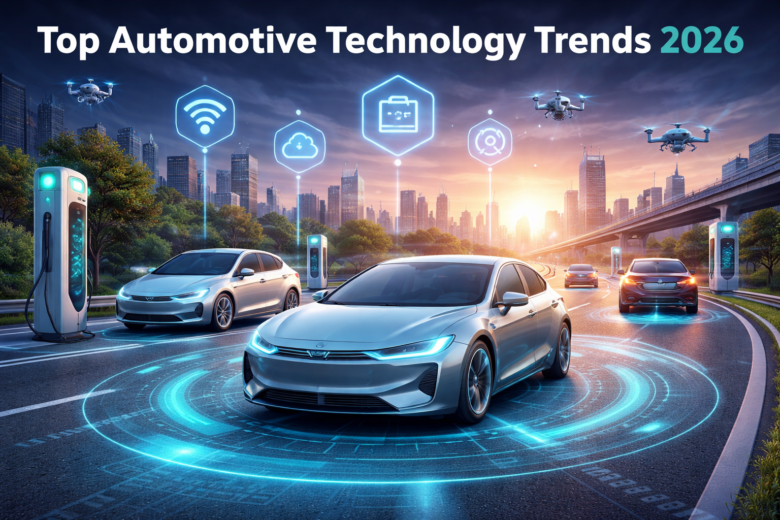
In 2026, the global automotive industry will be at a paradigm shift stage because of the rapid change in technology, sustainability aspirations, and changing consumer demands. The future of transportation is being reshaped more than ever before: intelligent electric vehicles, AI-driven mobility ecosystems, and so on. In a partnership with automakers, technology firms, and governments, safer, smarter, and more efficient mobility solutions are being developed, which will determine how people and goods are moved around the world.
Major Automotive Technologies Trends in 2026.
1. Electric Vehicles (EVs) Going Mainstream.
Electric vehicles are no longer niche. EV adoption is increasing rapidly in the world in 2026, triggered by better battery technology, longer driving range, and the growing level of charging infrastructure. The networks are charging quickly, thereby cutting downtime, and the price of batteries is going down, making EVs cheaper to the average consumer.
The governments are also contributing significantly through provisions of incentives, tax advantages, and tougher emission rules. This movement is forcing conventional car manufacturers to move their line-ups to the fully electric models.
2. The Development of Autonomous Driving Technology.
The development of self-driving is also underway, and Level 2 and Level 3 autonomous systems are increasingly common in current cars. Such systems are the adaptive cruise control, lane-keeping assistance, and automatic parking.
In 2026, it is concerned with enhancing safety, reliability, and real-world adaptability. The cars are gaining the ability to comprehend the environment more and react quickly because of advanced sensors, LiDAR systems, and AI algorithms.
3. Cars on the Internet and IoT Integration.
Connected cars are changing how we drive cars by incorporating the Internet of Things (IoT) technologies. Vehicles are now able to communicate with each other, with other infrastructure, and with cloud services to improve safety and efficiency.
Such features as real-time traffic information, remote diagnostics, and over-the-air (OTA) updates, as well as intelligent navigation systems, are becoming standard. The connectivity also supports predictive maintenance that minimizes the breakdowns and enhances the life of the vehicles.
4. Artificial Intelligence in Mobility.
The scenario of artificial intelligence (AI) is significant in determining the future of mobility. Driver assistance systems, traffic flow optimization, and in-car experiences are being enhanced with the help of AI-powered systems.
Vehicles are becoming friendlier and easier to use with AI-enhanced voice assistants as well as personalized infotainment systems. It is also used to facilitate autonomous driving through huge amounts of data processed in real time.
5. Green and Environmentally Friendly Innovations.
In 2026, sustainability is one of the key concerns. Carmakers are exploring the future through green materials, energy-saving production processes, and alternative sources of energy like hydrogen.
Improved aerodynamics and lightweight materials are also aiding in the consumption of energy, and recycling programs are also reducing environmental impact. The carbon neutrality development is accelerating innovation in the automotive value chain as a whole.
6. High-Quality Safety Technologies.
Safety is one of the priorities, and new technologies assist in decreasing accidents and ensuring passenger safety. Organizations are also improving their Advanced Driver Assistance Systems (ADAS) and have features such as collision avoidance, blind-spot monitoring, and driver-fatigue detection.
The increasing number of vehicles in 2026 are fitted with 360-degree cameras, intelligent braking systems, and real-time detection of hazards that would greatly enhance road safety.
7. Mobile-as-a-Service (MaaS) Growth.
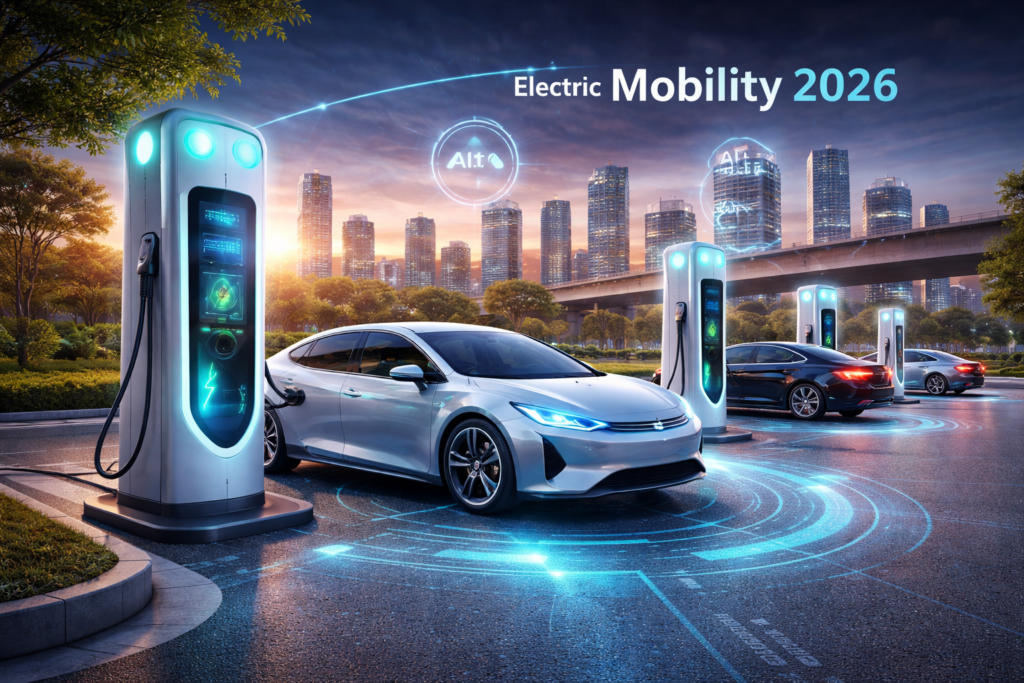
Mobility is becoming more of an access than ownership. Platforms that utilize mobility-as-a-service are becoming popular, with vehicle services being offered through ride-sharing, car-sharing, and subscription.
This is especially dominant in the cities, where people are more inclined to use the technology of flexible and affordable transportation rather than to possess a vehicle. Booking, managing, and paying for mobility services are becoming easier through digital platforms.
Industry Effect and Future Prospect.
These technologies are converging and are transforming the automotive world. Carmakers are transforming into mobility providers, and technology companies are becoming the important players in the industry.
A more interconnected, data-driven, and customer-centric automotive ecosystem will exist by 2026. Innovation will only increase and make the cities smarter and transportation systems more efficient.
Conclusion.
Innovation, sustainability, and digital transformation are used to describe the automotive industry of 2026. With the ongoing development of electric, autonomous, and connected technologies, the mobility experience of people is changing radically. These tendencies not only make it more convenient and safe but also open the way to a more efficient and clean future.
Frequently Asked Questions (FAQs).
1. What is the largest car trend next year, 2026?
The most important trend is the emergence of electric vehicles, which is motivated by environmental issues and the policy of governments.
2. Do we have fully autonomous cars in 2026?
Self-driving vehicles are still in the experimental phases, yet semi-autonomous vehicles are common in the market.
3. What is the contribution of connected cars towards increasing safety?
Connected cars are offering real-time data, which helps to make better decisions and prevent accidents.
4. There is a question of how AI is used in modern cars.
AI improves driving support, navigation technologies, and self-driving.
5. Mobility-as-a-Service (MaaS) What is Mobility-as-a-Service (MaaS)?
MaaS are shared and subscription-based transportation services as opposed to car ownership.