

Introduction: The Short Attention Spans.
The attention spans are quickly reducing in the current digitized fast world. As the use of social media sites, video clips, and real time consumption of content grows, learners are getting used to fast paces of information and not prolonged and in depth study. This has produced what most teachers refer to as an attention span crisis. Conventional systems of education that have depended much on long lectures and heavy reading have failed to keep students active. Consequently, this is causing the modern education system to change and modify in reaction to the demands of short-form content learners. This change is not only a trend but now a much-needed initiative to make learning more efficient and relevant in 2026.
Knowing the Attention Span Crisis.
Attention span crisis is a phenomenon that is currently experiencing an increasing challenge among the learners to concentrate on one task at a time over a longer duration. The problem is associated to a great extent with regular contact with high-speed digital information in the form of reels, brief videos, and instant prompts. It has now become habitual to students to demand instant interaction and quick returns. In comparison, long-form learning is less stimulating and slow. Studies indicate that when people are frequently multitasking and becoming distracted by digital devices, they have lower levels of deep focus and understanding. This poses a threat to the educators, who have to compete with relatively attractive digital platforms. This change is critical to comprehend in order to create learning experiences that meet the current cognitive habits.
Why Learning Habits are Overtaken by Short-Form Content.
Short-form work has gained popularity due to its fast nature, interesting and digestible content. It presents information that is small and digestible and therefore does not need much effort to process. Media that follows this format usually incorporates both images, music, and movement to attract one immediately. This is a multi-sensory experience that would help in making education less like work and more of an entertainment. Also, brief content suits well in time-consuming routines, enabling the learners to have information anywhere and anytime. This has led to students favoring micro-learning instead of studying by the long-term approach. This change is affecting the design and delivery of educational content.
The adaptation of Modern Education.
Microlearning Modules
Microlearning is one of the greatest transformations in education. Lessons are subdivided to shorter parts that can be achieved within a few minutes. This strategy assists the learners to remain on track and enhances learner retention because cognitive overload is minimized. Microlearning also enables students to access certain areas with ease without having to go through long materials.
Interactive and Visual Content.
In the contemporary classroom, video, animation, and infographics are becoming common tools as well as interactive opportunities in order to enhance the learning process. Visual storytelling is easy to notice and simplifies explaining complicated ideas in a simplified form. Gamified components and interactive quizzes help to increase the level of engagement and motivation even more.
Individualized Learning Processes.
Technology is becoming a key component in education systems in that technology provides customized learning. Students are able to study at their pace, select areas of interest and also get recommendations. This flexibility will keep the learners active and will lower the frustrations that come with the teaching methods that are one-size-fits-all.
Blended Learning Models
Blended learning represents a mixture of online and classroom teaching. Short videos, online courses, and interactive platforms are some of the tools employed by teachers in addition to face-to-face teaching. This is a blended strategy that serves a variety of learning styles and ensures that the students are actively engaged in the learning process.
Gamification in Education
Gamification adds in the form of rewards, points and challenges to learning. This strategy utilizes the inherent desire to achieve and to compete and hence education becomes more interesting. It also promotes regular attendance, and enhances the overall learning performance.
The Positives of acculturation to Short-Form Learning.
There are a number of benefits that are associated with adapting to short-form learning. It enhances student involvement since it resonates with his or her own consumption tendencies. It also enhances retention of the knowledge by displaying the information in small manageable form. Short form learning promotes the idea of continuous learning since students will tend to take short lessons on a regular basis. It also renders education more accessible and gives the learners the opportunity to learn at any time and place. The advantages indicate the necessity of changing the approaches to education to fit the current demands.
Challenges and Concerns
As much as short-form learning has its advantages, there are challenges associated with it. The risk of shallow understanding can be seen as one of the major concerns. Dividing information into bits will potentially reduce the level of knowledge acquired. It is even possible to get too reliant on entertainment where one learns about rather than knowing. Teachers need to balance between making learning interesting and ensuring that the learning process is academically rigorous. The other obstacle is to make sure that learners acquire the skill to concentrate on difficult assignments when in need.
Future of Education in a Short-Form World.
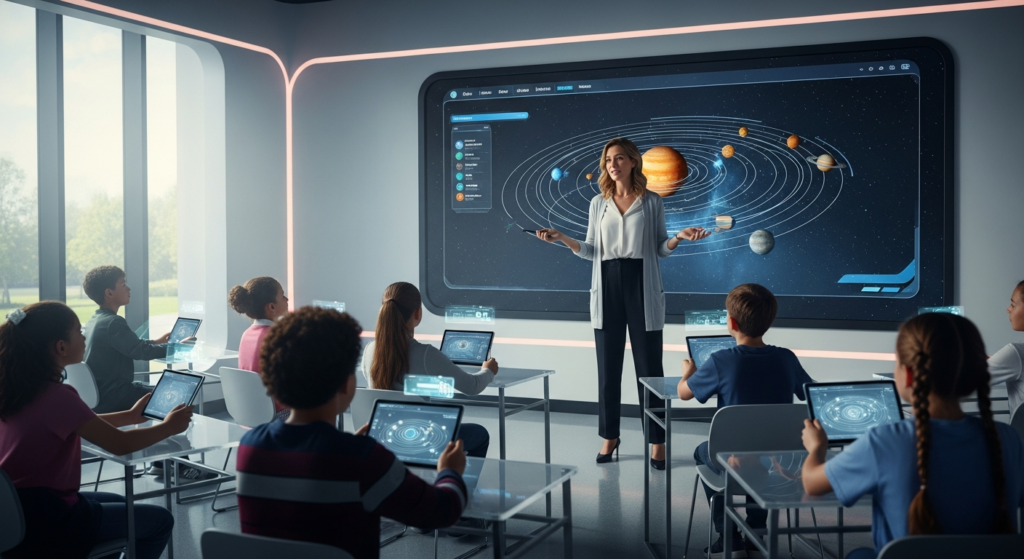
The future of education will presumably be associated with a moderate solution incorporating lentic and lentic learning. Although microlearning will still remain a major factor, deep learning based on developing critical thinking and problem-solving skills will be needed. Education will keep on being innovative through technology and thus learning becomes interactive and personal. It will require the teachers to keep on changing their approach to suit the evolving behavior of learners. In the end, it will be aimed at developing an engaging and effective system.
Conclusion
The attention span crisis is defining the modern education scene. Educational systems should evolve to fit the needs of the learners who are liking short form content more and more. The needs of the modern students can be addressed through the use of microlearning, interactive content, and individualized solutions that allow educators to meet the requirements of the present day students. Nonetheless, it is also necessary to find a balance that would provide profound knowledge and critical thinking. The future of education is in the combination of innovation and traditional processes to come up with whole-souled learning experiences that will equip students with real life challenges.
FAQs
1. What is the crisis of the attention span?
It is the impaired capability of students to have long attention.
2. What is the reason why students like short-form content?
It is fast, captivating, and is convenient to take at any time.
3. What is microlearning?
Microlearning consists of brief lessons that are targeted at understanding quickly.
4. Does the short form of learning work?
Yes, but it is most effective when it is used together with more profound learning techniques.
5. What can teachers do to conform to this trend?
Through interactive provisions, graphic presentations and reduced lesson duration.